Breaking the efficiency ceiling in hazardous areas
Interest in hazardous area motors has never been greater. According to a report by Strategic Market Research, the total global market for all types and ratings – including low-, medium-, and high-voltage motors – had an estimated value of $7.1 billion in 2024, and is projected to grow to $10.4 billion by 2030. The forces behind that trajectory are converging in ways that are fundamentally changing how operators approach motor selection: tightening environmental regulations, volatile energy costs, the shift to industrial electrification, and an operational footprint expanding into remote and inaccessible environments.
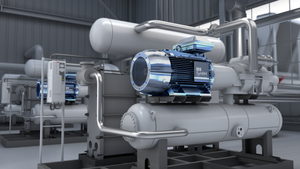
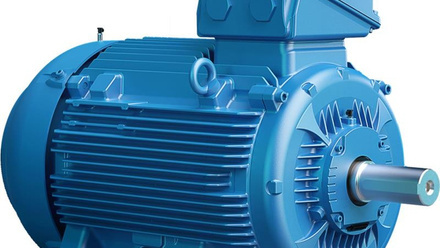
In response to this evolving landscape, ABB has introduced an IE6 Hyper-Efficiency motor certified to ATEX and IECEx requirements for Zone 1 and Zone 2. Built on magnet-free synchronous reluctance (SynRM) technology, ABB’s SynRM Increased Safety range covers shaft heights IEC 90–315 and power ratings from 0.75 to 315kW – with motors up to 90kW classed as IE5 efficiency, and now those above 90kW certified as IE6 as standard.
The IE6 SynRM Increased Safety motor delivers up to 60% lower energy losses than the IE3 induction motors that remain the default choice across chemicals, oil and gas, pharmaceuticals, food and beverage, and marine sectors. In industries running continuous processes around the clock, that 60% gap carries serious weight.
Quantifying the lifecycle economics
The purchase price of an industrial motor accounts for only around 2% of its lifetime cost, with 1% accounting for maintenance and the remaining 97% dominated by energy usage. That ratio makes efficiency class the single most commercially significant specification parameter, yet many hazardous area installations continue to operate on IE3 motors.
Over a standard 20-year service life – assuming 8,760 operating hours per year, 75% average load, and an energy cost of €0.20/kWh – choosing a single 110 kW IE6 SynRM motor over an IE3 unit generates €87,520 in energy savings, with a payback period of just eight months and 157,540kg of CO2 avoided. This is the emissions equivalent of 37 petrol-powered passenger cars driven for a full year.
The technical case
SynRM technology operates on the principle of magnetic reluctance. The rotor contains no windings, no magnets, and no rare earth materials – yielding significant advantages in thermal performance and long-term reliability.
The absence of rotor copper losses means the SynRM motor has up to 30°C lower winding temperatures and up to 15°C lower bearing temperatures than an equivalent induction model. Lower bearing temperatures are particularly important in reducing life-cycle costs because bearing failures cause about 70% of unplanned motor outages. Cooler running also has direct implications for how the SynRM motor can be classified and deployed in explosive atmospheres.
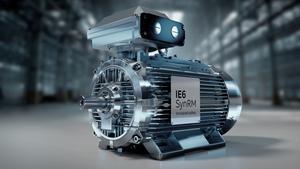
In Zone 1, where flammable gases or vapours are likely to be present under normal operating conditions, that cooler running profile unlocks a real specification edge. Where a flameproof motor with a special enclosure would previously have been the default choice, operators can specify an Increased Safety motor – a more cost-effective installation without any compromise on certified safety.
In Zone 2 applications, the improved loadability of SynRM technology means more power from a given frame size, enabling a smaller, lower-cost motor to fulfil the same duty. For offshore installations and mobile plants – where every kilogram and every centimetre of footprint is an engineering constraint – that specification brings real operational value.
Certified for the conditions that matter
ABB’s IE6 SynRM Increased Safety motor carries full ATEX and IECEx certification for Zone 1 and Zone 2 applications and is certified for use with variable speed drives (VSDs). Running the motor with a VSD enables precise speed and torque control across the full operating range, including the partial-load conditions where conventional induction motors suffer their steepest efficiency penalties. For pumps, fans, and compressors running variable load profiles, that combination of VSD compatibility and IE6 efficiency is exactly what the application demands.
With protection ratings up to IP66, the motor is hardened against dust, water ingress, and environmental exposure. Temperature class compliance across both arctic and high-heat operating conditions extends the deployable envelope from liquefied natural gas (LNG) terminals to high-ambient chemical processing sites.
A platform for the long term
The IE6 SynRM Increased Safety motor sits within the company’s portfolio of IEC low voltage motors for hazardous areas, spanning Increased Safety, Flameproof, and Dust Ignition Proof protection types, with induction alternatives available up to IE4. Hazardous area installations combine different zone classifications, process duties, and environmental conditions that demand a flexible, application-specific approach to specification.
For original equipment manufacturers (OEMs) and end-users evaluating the next generation of hazardous areas motors, the efficiency ceiling that previously constrained Zone 1 and Zone 2 selection has been broken. ABB’s IE6 SynRM Increased Safety motor delivers certified safety and a total cost of ownership case that is hard to dispute.
------------------
This article appeared in Renew magazine. To read more or request your personal digital or print edition of Renew, click here.