
Ex Explained #3: Increased Safety (Ex eb) – Preventing Ignition at the Source
You'll see it marked as Ex eb (or Ex e on older equipment) on equipment such as motors, terminal boxes and luminaires. It's one of the most widely used protection concepts, and one of the easiest to unknowingly compromise during repair.
The Principle: No Arcs, No Sparks, No Hot Surfaces
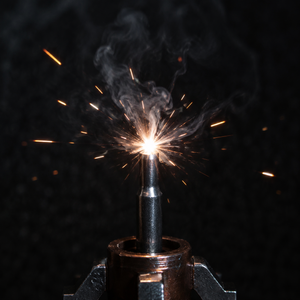
Increased safety applies to equipment that does not arc, spark or produce ignition-capable hot surfaces in normal operation. The protection concept then adds enhanced security against these ignition sources ever occurring, including under recognised fault and overload conditions.
In practice, that means the design goes well beyond standard industrial equipment in several areas.
Electrical connections are made mechanically secure. Terminals are designed so they cannot work loose under vibration, because a loose connection can arc or overheat. Terminals are made to not be able to rotate under tightening, thus preventing closure of creepage and clearance distances.
Creepage and clearance distances are significantly enhanced. The separation between live parts, and between live parts and earth, is deliberately larger than in standard equipment, reducing the risk of tracking and flashover.
Temperatures are tightly controlled. The equipment is designed so that no surface, internal or external, exceeds its limiting temperature. Note that the limiting temperature is the lowest temperature marked on the nameplate, not the equipment's normal running temperature.
Ingress protection matters to the concept itself. Unlike Ex db, where the flameproof joints are metal-to-metal, Ex eb relies on its enclosure to keep out moisture, dust and conductive contamination that could cause tracking between live parts. Gaskets and seals are part of the protection here, so they must be correct and in good condition.
Ex eb Motors: The Detail That Matters
For rotating machines, increased safety introduces requirements you won't find on a standard motor's rating plate. An Ex eb motor is designed so its windings and surfaces never reach the limiting temperature, the lowest temperature marked on the nameplate, and its protective devices and installation are part of achieving that.
This is why an Ex eb motor, its protection and its installation work together as a system. Any change to one part can affect the others, and the certification details must be respected throughout.
Why This Matters for Repair
Increased safety looks less dramatic than flameproof. There are no thick castings or machined joints, and an Ex eb motor can appear very similar to a standard one. That's exactly what makes it easy to compromise.
Repairs, overhauls and rewinds of Ex eb equipment are permitted, but only within the requirements of the repair standard, BS EN IEC 60079-19, and only by competent personnel. Points that matter in practice:
Rewinding Ex eb machines is contentious. Because the protection concept is built on windings never exceeding their limiting temperature, many take the view that a correctly protected Ex e machine should never require a rewind in the first place. Where a rewind is being considered, Annex E of BS EN IEC 60079-19 is the relevant reference, and the certified winding design must be replicated and verified, a rewind that changes the design could invalidate the protection.
Terminals and connections must match the certification. Replacement terminals, links and fasteners need to be of the correct certified type, not the nearest equivalent in the stores. Creepage, clearance, anti-vibration, anti-rotation, insulation able to withstand thermal considerations are all essential details.
Seals and gaskets must be correct and complete. Because the enclosure's ingress protection is part of the concept, a damaged or missing gasket is not a cosmetic issue.
Creepage and clearance distances must be preserved. Care is needed during reassembly and when routing internal connections so that Ex eb specific separations are maintained.
Document everything. As with all Ex repair work, the repair must be recorded, the equipment labelled as repaired, and the user informed in writing if the equipment can no longer be confirmed as meeting its original certification.
Where You'll Find Ex eb Equipment
Ex eb is designed for Zone 1. In Zone 2, you would typically find the related concept Ex ec instead. Typical Ex eb applications include cage induction motors, terminal and junction boxes, luminaires, and the terminal enclosures fitted to other Ex equipment. It is often combined with other concepts on the same machine, for example, a flameproof motor body with an increased safety terminal box, marked Ex db eb.
The Bottom Line
Flameproof (Ex db) assumes an ignition might happen and manages the consequences. Increased safety (Ex eb) is built so the ignition source never becomes active. Both are valid, tried and tested approaches that have been proven over many decades—but they place very different demands on the people who maintain and repair the equipment. With Ex eb, the protection lives in details that are easy to overlook: a terminal, a gasket, a winding specification.
What's Next?
In the next post, we'll look at Intrinsic Safety (Ex ia), a concept that protects not by containing energy or excluding atmospheres, but by making sure there's never enough energy to cause ignition at all.
#ExExplained #HazardousAreas #AEMT #Engineering #IndustrialSafety