
Eight decades of change in electromechanical repair
When a business reaches its 80th year, there is a natural temptation to look backwards. In the case of Fletcher Moorland, that history stretches to 1946, when Matt Fletcher’s grandfather established what was then known as Electrical Rewinds and Supplies, serving the potteries, mines and industry around Stoke-on-Trent. But while the anniversary provides the hook, the more interesting story lies in how dramatically the world around the business and the work it carries out has changed over those eight decades.
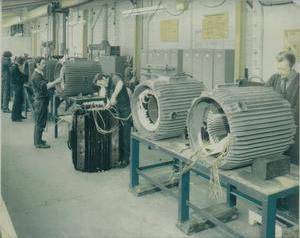
In the early years for Fletcher Moorland, the focus was clear and relatively narrow. Electric motor rewinding sat at the heart of the operation, supporting the heavy and localised industries that defined British manufacturing at the time. “I’d say the majority of the company’s work then would have been small electric motors,” Matt recalled, “but we might have had big slip ring motors from quarries and mixing facilities. And Michelin was on the doorstep as well.”
Even then, the fundamentals of the craft were established. Despite the passage of time, Matt is clear that the core skills have remained. “The laws of physics don’t change,” he added. “You’re still putting coils into a slot with insulation. My grandfather would still recognise what we do today.”
What has changed, however, is almost everything around that core process.
FROM CRAFT TO CONTROLLED PROCESS
In the early decades, rewinding was a largely manual craft, shaped as much by available materials as by formal standards. Insulation might have been cotton, paper or even wood, and processes such as stripping windings were, at times, as rudimentary as setting the motor onto a bonfire.
By the 1990s, that began to shift. The introduction of burn-off ovens, core-loss testing, and defined temperature limits marked a move towards a more controlled, measurable process. This was driven not just by technology but also by a need to challenge misconceptions in the market.
“There was a view that as soon as you rewind a motor, you lose efficiency,” Matt explained. “The industry had to say, hold on a minute, as long as certain steps are taken, you’re not reducing efficiency.”
That shift also reflects a broader change in how the sector has positioned itself. What was once seen as a repair trade has increasingly had to demonstrate engineering rigour, backed by standards, testing and guarantees. Fletcher Moorland’s decision to adopt higher-grade insulation and extend warranties beyond those of some new equipment manufacturers illustrates that change in mindset.
CHANGING CUSTOMERS, CHANGING PRIORITIES
If the processes have evolved, the customers have arguably changed even more.
In the post-war decades, downtime was often accepted as part of industrial life. And many large operations even maintained their own in-house rewind facilities. Today, expectations are very different.
“I just have a feeling there was more acceptance of downtime,” Matt reflected. “Now you’ve got customers that are more informed and demanding. But, also sometimes just focused on price.”
This shift has created a tension that still exists across the sector. On one hand, there is increasing pressure to minimise cost and operate within tight budgets. On the other hand, the financial impact of unplanned downtime has never been greater, particularly in sectors such as automated warehousing, food processing and logistics.
The result is a more complex conversation around value. Rather than simply repairing a failed motor, businesses are now expected to contribute to broader maintenance strategies, balancing short-term cost against long-term reliability.
THE EXPANDING SCOPE OF THE SECTOR
Perhaps the most visible change over the past 80 years is the sheer expansion in the scope of work.
Where Fletcher Moorland once operated in a landscape dominated by heavy industry, today’s customer base reflects a very different economy. Steelworks and mining have given way to automated distribution centres, pharmaceuticals and fast-moving consumer goods.
“There weren’t wind turbines when the business started, there weren’t electric buses, and there wasn’t the level of food processing we have now,” Matt said. “You’ve gone from heavier industries to more specialised sectors.” That shift has been mirrored by diversification within the business itself. The move into electronics repair in the 1980s marked a significant turning point, driven by the emergence of variable speed drives and increasingly complex control systems.
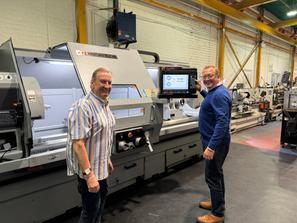
“We realised this was the way forward because electronic equipment needs to be repaired too,” Matt added. From there, the scope continued to widen: servo motors, robotics, CNC machining and, more recently, electrified transport and renewable energy systems. Each step has required new skills, new investment and, in many cases, a willingness to learn through trial and error.
TECHNOLOGY: A CHALLENGE AND AN OPPORTUNITY
Advances in technology have not only created new opportunities but also introduced new challenges.
Miniaturisation, proprietary components and software integration have, at times, made equipment harder to repair. Matt is blunt on the issue: “Products were designed to make them difficult to repair, for example, some of the boards are so small, you can’t get to them. That is improving in some equipment manufactured today, but much legacy equipment is still operating.”
At the same time, those same technological advances have enabled entirely new service offerings. Condition monitoring, once carried out using bulky, specialist equipment, has evolved into a sophisticated suite of tools including vibration analysis, thermography and ultrasound. For Matt’s company, this has been an opportunity, as he explained: “We’ve combined all these technologies into one unique system, Meerkat. My grandfather would probably have never dreamt of a system that automatically sends machine condition data back to engineers to remotely diagnose problems before failures happen, sitting alongside production equipment.”
FROM REACTIVE TO PREVENTIVE
This shift towards a broader, more strategic role is perhaps the defining change in the sector today.
Historically, the model was almost entirely reactive. Equipment failed, it was removed, repaired and returned to service. Even planned maintenance often followed fixed schedules rather than actual condition.
That approach is increasingly being replaced by predictive and preventive strategies, driven by data and supported by modern monitoring technologies.
Customers are no longer simply asking for a repair. They are asking when something will fail, how long it can safely run, and how to plan interventions to minimise disruption.
For Fletcher Moorland, that shift has fundamentally changed the nature of the business. While electromechanical repair remains central, it now sits within a wider offering focused on reliability, efficiency and long-term performance.
Matt draws a simple comparison: “Like the NHS, there’s always going to be an A&E department, but there’s also preventative departments. And that’s where we are seeing growth.”
LOOKING AHEAD
Eighty years on from its founding, the tools, technologies and industries served by Fletcher Moorland may have changed beyond recognition. Yet the underlying principle remains the same: keeping critical equipment running.
What has evolved is how that objective is achieved. From craft-based rewinding to data-driven maintenance strategies, the sector has expanded from a reactive service to a proactive partner in industrial performance.
If the past eight decades are any guide, that evolution is far from over.
guide, that evolution is far from over.
A MONUMENTAL TASK
And what of the anniversary itself? How is the business planning to recognise it? Not in the way you might expect. Yes, there will be a chance for the team to get together and celebrate this major achievement later in the year, but the company is using the milestone as an opportunity to support a much-loved local charity, Dougie Mac, which provides hospice services to adults, young adults and children living with a life-limiting illness in Stoke-on-Trent, North Staffordshire and the surrounding villages.
Marking the 80th year, the Fletcher Moorland team have committed to cycling the equivalent of once around the world, 24,901 miles, in 80 days to raise money for the hospice. And when we spoke to Matt, unsurprisingly, the team was on target to complete the challenge, having cycled over 12,000 miles halfway through the allotted time. I just hope that for the team’s sake, someone is monitoring their condition.
------------------
This article appeared in Renew magazine. To read more or request your personal digital or print edition of Renew, click here.